



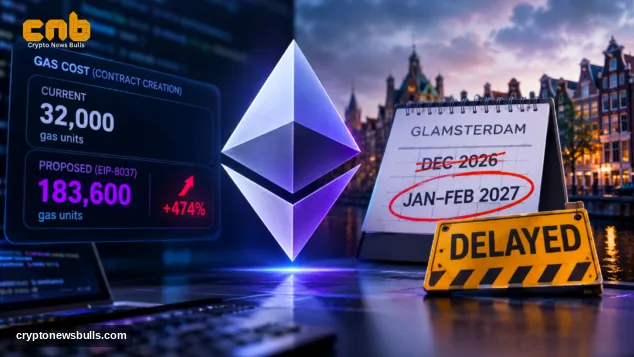
Ethereum’s upcoming major network upgrade, known as Glamsterdam, might be pushed back into 2027 as project contributors analyze whether suggested gas-pricing adjustments could break thousands of active smart contracts.
This hurdle introduces a fresh obstacle to Ethereum’s broad scaling roadmap, which seeks to boost transaction throughput while keeping decentralized applications secure.
Current conversations indicate that a rollout in January or February 2027 is more probable than the previously targeted December timeframe, though developers have yet to cement a new mainnet launch schedule.
At the heart of the issue are two specific proposals, EIP-8037 and EIP-8038, which threaten to drastically alter how the network bills users for certain blockchain operations.
Ethereum Developers Face A Major Glamsterdam Decision
According to an official update from the Ethereum Foundation, security researchers uncovered compatibility glitches in active smart contracts during routine testing.
The changes in question alter the expenses tied to generating blockchain state and retrieving stored data.
Specifically, one vital modification would elevate the base gas fee required to deploy a smart contract from 32,000 units to 183,600 units.
This adjustment equals a jump of roughly 474%, which is calculated prior to any extra execution and code-storage expenses.
For builders, the complications go beyond simply needing more gas.
A number of currently operating smart contracts rely on pre-upgrade assumptions about gas usage that would be invalidated by the transition, potentially causing these programs to fail under the fresh guidelines.
Ethereum Foundation developer Marius van der Wijden has cautioned that up to 15,000 individual programs could be impacted.
Why Glamsterdam Could Be Delayed Until 2027
These worries have already altered the timeline for the network upgrade.
The debut of Glamsterdam was initially scheduled for the Hoodi test network on October 26, but it was put on hold while engineers dug into the compatibility bugs.
Following further reviews and talks, the team is evaluating a modified testing calendar.
A tentative deployment on Hoodi during the week of December 14 has been floated, while the mainnet rollout could happen in late January or February 2027, assuming that testing and application fixes run smoothly.
The upcoming developer conference call on November 26 may offer more clarity.
This is not the first technical roadblock encountered during the preparation for Glamsterdam.
Bitcoinist previously reported that Ethereum developers fixed a critical Glamsterdam vulnerability involving validator deposits.
The newest set of worries stands apart because they center on maintaining compatibility with tools already live on the network.
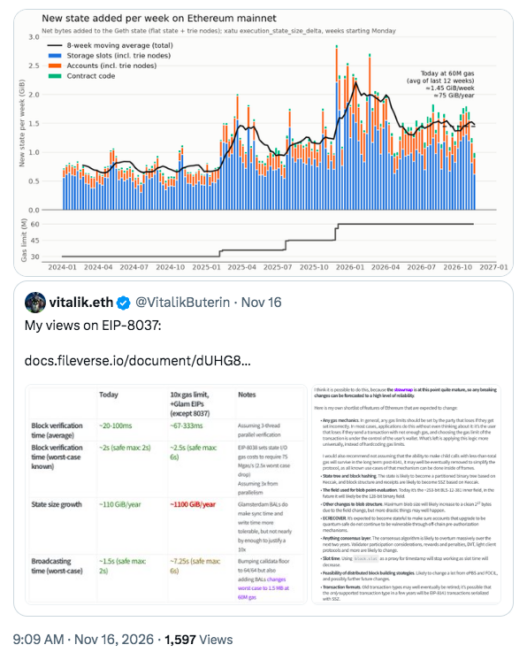
What The Upgrade Means For Ethereum’s Scaling Plans
Despite these uncertainties, Glamsterdam remains a critical pillar of Ethereum’s long-term evolution.
The upgrade is built to expand network throughput via enhancements to block validation, transaction handling, and gas accounting systems.
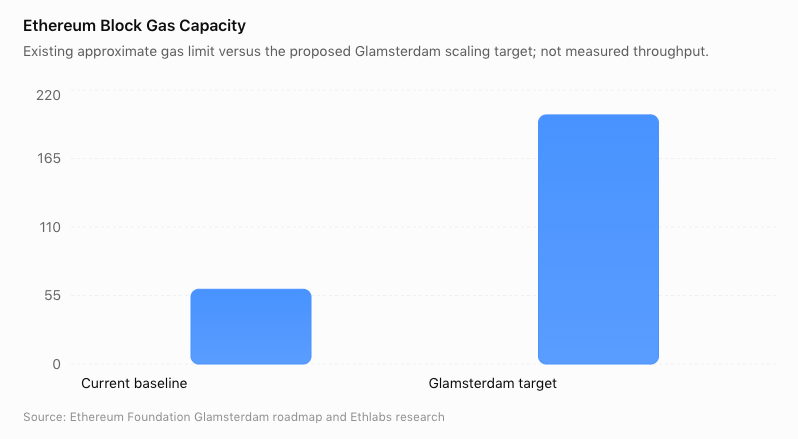
A primary goal is enabling a massive jump in the network’s gas limit, which could scale capacity from roughly 60 million up to 200 million gas per block.
That shift would amount to more than a threefold expansion in theoretical gas capacity.
As Bitcoinist previously explained when examining Ethereum’s changing layer-2 strategy, expanding mainnet capacity has become an increasingly important part of the network’s scaling vision.
Even so, higher capacity must be carefully weighed against the danger of breaking existing decentralized applications.
As a result, engineers are confronted with a tough choice: keep the proposed gas adjustments and give impacted teams time to adjust, or rewrite the specifications, which might necessitate another round of rigorous testing.
Could The Delay Affect Ethereum’s Long-Term Outlook?
A postponed upgrade does not inherently signal a breakdown in Ethereum’s overall scaling strategy.
Instead, taking extra time for testing can help keep compatibility errors from bleeding into the main blockchain.
Ethereum is already well-acquainted with the advantages and hurdles that accompany expanding network capacity.
Bitcoinist previously examined how Ethereum’s scalability upgrades have influenced transaction fees and network activity.
Glamsterdam stands as the next chapter in that ongoing process.
For investors, the key milestones to watch are the November 26 developer summit, updates regarding the vulnerable smart contracts, and official confirmation of a revised Hoodi testnet rollout.
A successful resolution could ultimately reinforce trust in Ethereum’s capacity to deploy major technical upgrades without destabilizing current applications.
Ultimately, Glamsterdam’s long-term significance may depend less on when it launches and more on whether developers can deliver the upgrade safely.

Written by

 Yuki Yamamoto