


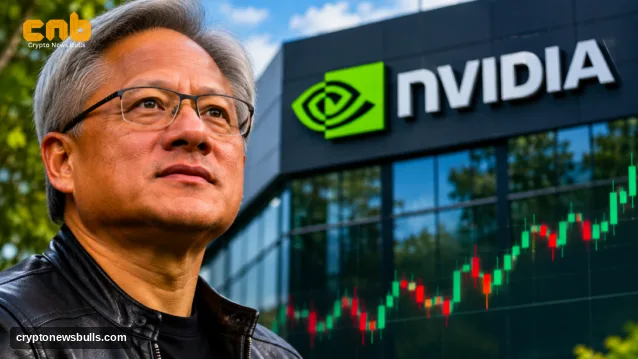
Former Nvidia CEO Jensen Huang is reportedly weighing a surprise comeback to the artificial intelligence chip manufacturer just days after stepping down, creating the potential for a major shift across the technology and financial sectors.
With influential figures in Silicon Valley backing his potential return, market participants are monitoring whether this leadership ambiguity might impact Nvidia shares and broader risk-on sentiment, which extends to Bitcoin.
These events arrive at a delicate juncture for the cryptocurrency market. As noted previously, Bitcoin dropped alongside Nvidia during a broader tech-sector sell-off, demonstrating how shifts in institutional mood can simultaneously affect traditional equities and digital currencies.
Jensen Huang’s Nvidia Comeback Gains Momentum
According to a November 15 report from the Financial Times, which was later covered by Reuters, Huang has spoken with close allies about a possible return to Nvidia.
These conversations follow pushes from Silicon Valley backers who are attempting to convince the firm’s board to reverse its stance on his departure.
One ally has outlined intentions to organize a coalition of tech leaders to lobby for Huang’s reinstatement while also pursuing backing from the White House.
This turn of events marks an unexpected twist for Nvidia, which initially announced Huang’s resignation on November 12 and tapped Chief Financial Officer Colette Kress as interim CEO.
Nvidia stated publicly that it has commenced a search for a permanent chief executive, evaluating both internal and external contenders.
Huang’s exit arrived in the wake of reports regarding his personal relationships and scrutiny surrounding the company’s business activities tied to China. Prior to this, Nvidia’s board had launched an independent probe into issues concerning a potential foreign intelligence operation.
Despite these controversies, Huang remains deeply tied to Nvidia’s evolution into a dominant force in the artificial intelligence space.
Consequently, his prospective return could heavily influence investor sentiment, though the board has not officially confirmed any reinstatement plans.
Why Huang’s Return Could Matter For Bitcoin
While Nvidia and Bitcoin function within distinct markets, their valuations are frequently driven by parallel currents in investor psychology.
Nvidia serves as a primary barometer for artificial intelligence enthusiasm, whereas Bitcoin increasingly attracts institutional players who also hold stakes in technology equities.
When panic ripples through leading tech enterprises, traders frequently scale back their exposure to risk-tolerant assets.
Bitcoinist previously explored this dynamic when upheaval at Nvidia spilled over into crypto markets, demonstrating how anxieties centered on the AI sector can align with liquidation waves across digital tokens.
An eventual return by Huang could shift the prevailing market narrative if participants view his reinstatement as a sign of steady leadership.
However, a bullish market response is not guaranteed. The ultimate resolution of Nvidia’s executive discussions, the active investigation, and macroeconomic factors will all shape investor trust.
A parallel evaluation of both assets over the same timeframe can help clarify whether Bitcoin’s movements are reacting to shared shifts in risk appetite.
Bitcoin Technical Analysis: Could Improving Sentiment Support A Recovery?
Recent price swings in Bitcoin place a heavy emphasis on technical confirmation.
Even though developments at Nvidia carry weight for overarching market psychology, BTC must still prove that buyers are returning with adequate strength.
We have previously highlighted how Bitcoin’s correction tied to AI turbulence could present entry windows for long-term participants if market conditions begin to stabilize.
From a technical standpoint, traders should watch whether Bitcoin can carve out a higher low on the 4-hour timeframe and successfully break back above its closest confirmed resistance barrier.
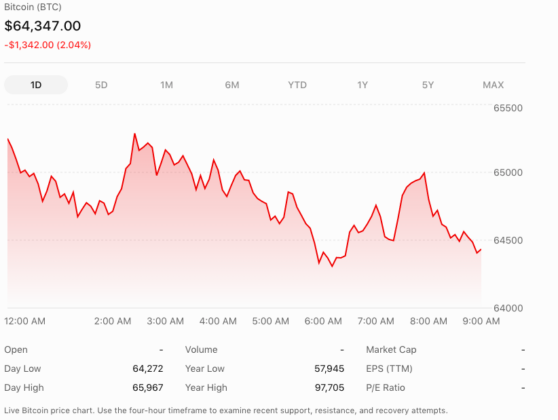
A confirmed breakout supported by rising volume would add weight to a bullish recovery thesis.
On the flip side, another rejection at resistance would signal that sellers maintain dominance, independent of happenings in the technology sector.
As a result, the connection between Nvidia and Bitcoin is best treated as a useful sentiment gauge rather than a definitive predictor of BTC price trajectories.
Nvidia’s Next Move Could Shape Market Sentiment
Huang’s prospective comeback arrives at a critical juncture for Nvidia as an enterprise.
The firm is slated to release its fiscal third-quarter 2027 earnings report on November 17, providing stakeholders with fresh insight into its operational health and forward-looking guidance.
Robust financial figures could alleviate concerns regarding ongoing demand for AI hardware, whereas prolonged management instability could complicate the market’s reception.
For Bitcoin, the ripple effects will hinge on whether corporate updates from Nvidia help foster a broader revival in trader confidence.
The convergence of a potential executive reversal, upcoming earnings figures, and Bitcoin’s shifting technical framework makes this a critical situation to follow closely.
While Huang’s return remains unconfirmed, the ongoing dialogue regarding his future at Nvidia stands to serve as another major test of sentiment across the technology landscape.
In the interim, Bitcoin traders would be wise to track both the resolution of Nvidia’s leadership situation and BTC’s independent price action prior to making assumptions about the next market trend.

Written by

 Yuki Yamamoto