




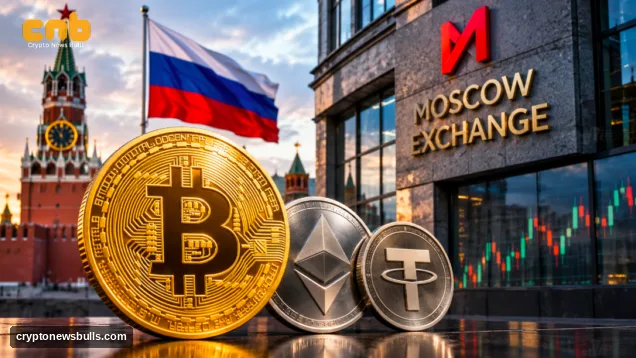
A new era of cryptocurrency oversight has officially begun in Russia, with regulations permitting organized digital asset trading having reportedly gone into effect on November 22. This shift arrives as the Moscow Exchange readies itself to roll out trading for Bitcoin, Ethereum, and USDT in December, which could carve out an additional regulated pathway for Bitcoin adoption within the nation’s financial framework.
This regulatory update does not imply that cryptocurrency transactions are immediately operational across Russian exchanges. Before launching, trading platforms must first have their specific rules sanctioned by the Bank of Russia and finalize all necessary operational arrangements.
Even so, this regulatory milestone marks another significant step toward integrating Bitcoin into the country’s established monetary system.
Russia Opens The Door To Regulated Bitcoin Trading
Per the official regulatory statements from the Bank of Russia, exchanges are permitted to facilitate cryptocurrency transactions under the updated framework, provided that their specific trading guidelines secure official approval.
Participating entities, including brokers, asset managers, and clearing organizations, must be officially registered by the exchanges. Furthermore, these platforms are tasked with keeping thorough transaction logs, overseeing market activity, computing market pricing, and reporting data directly to the central bank.
These mandates are designed to bring heightened transparency to a market sector that has historically depended heavily on niche cryptocurrency platforms and alternative exchange methods.
This progression has also drawn notice across social media platforms, notably highlighted by the financial news profile Watcher.Guru regarding Russia’s choice to authorize exchange-based crypto trading under the watch of the central bank.
This rollout trails several months of preparatory regulatory work. Broader digital currency legislation in Russia reportedly took effect back in September, laying down a legal foundation for brokers, digital asset depositories, and exchanges.
Despite these updates, using cryptocurrency to settle everyday retail purchases remains strictly forbidden inside Russia.
Moscow Exchange Prepares Bitcoin And Ethereum Trading
Reports indicate that the Moscow Exchange is aiming for a December 1 launch for pilot cryptocurrency trades, leveraging the same technological infrastructure currently utilized for traditional securities.
The initial marketplace is slated to feature Bitcoin, Ethereum, and USDT, with all trades settled via the National Clearing Centre.
Scheduled operating hours will run from 6:50 a.m. to 11:50 p.m. Moscow time, while settlement choices are anticipated to feature both same-day and next-day delivery protocols.
As previously covered by Bitcoinist, the Moscow Exchange has been actively testing its digital asset systems alongside professional market participants ahead of the official rollout.
This initiative carries substantial weight because it could grant qualified investors access to digital assets via traditional financial intermediaries rather than forcing them to rely exclusively on crypto-native exchanges.
In the case of Bitcoin, this accessibility could bolster long-term adoption by introducing the currency to participants already accustomed to conventional investment markets.
That said, the initial rollout will launch through pilot transactions, meaning actual user engagement will ultimately dictate how fast the market expands.
Could Russia’s New Rules Increase Bitcoin Demand?
The ultimate effect on Bitcoin relies heavily on the volume of fresh capital that flows into this newly regulated space.
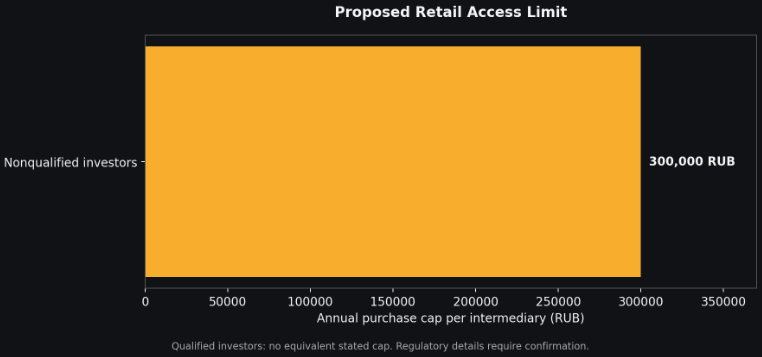
Under the outlined framework, nonqualified investors are restricted to a maximum annual cryptocurrency purchase limit of 300,000 rubles per intermediary.
Conversely, qualified investors are expected to enjoy broader access free from identical purchasing caps.
Such constraints point to a cautious initial rollout by Russian regulators rather than an unfettered expansion of the crypto marketplace.
Even so, channeling Bitcoin through standard brokerage frameworks may entice investors who previously steered clear of specialized crypto trading websites.
This transition also aligns with a wider global shift wherein legacy financial institutions are increasingly weaving digital assets into their product offerings.
Unlike standard securities, Bitcoin is built on a decentralized network governed by a strict issuance timetable and a hard cap of roughly 21 million coins.
This intrinsic scarcity continues to anchor Bitcoin’s long-term investment thesis.
Nevertheless, expanded avenues for trading do not automatically translate to surging valuations. Certain trading volume might simply shift over from pre-existing platforms rather than signaling genuinely brand-new demand.
Why December 1 Could Become An Important Milestone
The primary focal point moving forward will be whether the Moscow Exchange initiates its scheduled pilot transactions right on time.
A variety of elements will dictate the success and importance of this venture, such as trading volumes, overall liquidity, broker involvement, and how smoothly investors can manage and withdraw their digital holdings.
The prevailing international sanctions landscape presents another critical variable.
Both the Moscow Exchange and the National Clearing Centre remain targets of U.S. sanctions, introducing complex operational and compliance hurdles regarding how crypto settlements are handled.
Such complications might deter international involvement and complicate transactions tied to dollar-denominated digital assets.
In the interim, Bitcoinist’s most recent reporting on Russia’s regulatory structure underscores the gap between receiving legal clearance and achieving actual trading accessibility.
For the moment, the updated regulations establish the baseline framework, while December’s pilot phase will offer a clearer picture of real-world market operations.
What This Means For Bitcoin’s Future
Russia’s shift toward sanctioned cryptocurrency trading highlights the rising acknowledgment of Bitcoin as a legitimate investment class.
Although the regulatory architecture carries distinct limitations and unanswered operational questions, the integration of Bitcoin onto a major national securities marketplace serves as yet another instance of traditional finance adapting to digital currencies.
The long-term opportunity hinges on broadening market access while preserving Bitcoin’s decentralized nature and fixed supply.
Whether Russia emerges as a substantial driver of incremental Bitcoin demand will rely entirely on actual investor participation rather than policy announcements alone.
For now, December 1 remains the pivotal date to monitor as the Moscow Exchange edges closer to unveiling its digital asset marketplace.

Written by

 Yuki Yamamoto

