





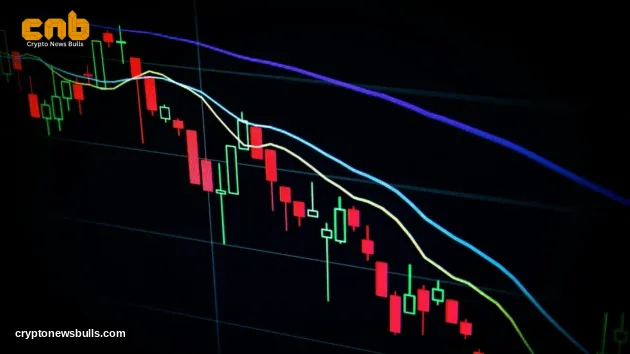
The cryptocurrency market absorbed a severe blow from the Nvidia controversy after the company’s board initiated an independent inquiry into CEO Jensen Huang. This action followed reports concerning his relationship with a woman whom U.S. intelligence agencies suspect of having ties to Chinese intelligence. The development emerged over the weekend of November 8–9, 2026, while conventional U.S. stock exchanges remained shut, leaving digital asset markets—which operate continuously—to absorb the initial, sharp shock.
Bitcoin dipped briefly under $74,000, hitting its lowest mark since August, while Ethereum experienced a more pronounced decline below $2,100. Reports indicate that upwards of $1 billion in leveraged crypto positions were wiped out within a 24-hour window, predominantly consisting of long positions. Meanwhile, Nvidia perpetual futures on venues like Binance and Hyperliquid, alongside tokenized Nvidia equities, retreated by roughly 3% to 4% ahead of the official market open.
How a Personal Scandal Became a Market Event
In an internal memo, Huang acknowledged being unfaithful to his spouse. The individual involved was identified as Alice Huang (also known as Huang Le), a former executive at Megaspeed, a cloud enterprise based in Singapore. U.S. intelligence evaluations suggest she was recruited by the Ministry of State Security of China, a claim that has received widespread coverage. Nvidia maintained that it has no indication proprietary secrets or national security data were compromised, and Huang pledged complete cooperation with the board investigation.
Timing played a critical role. With Wall Street closed, digital asset exchanges served as the primary mechanism for pricing in the uncertainty. On Hyperliquid, Nvidia’s NVDA-USDC perpetual futures dropped approximately 3.8% to hover near $180.50 amid heavy trading activity. Tokenized Nvidia shares (NVDAX) faced comparable downward pressure, trading at a discount relative to the Friday close on the Nasdaq, which indicated that crypto participants anticipated a deeper correction once standard markets resumed trading.
Market observers characterized the movement as a standard risk-off reaction intensified by leverage. Dan Khus of LVRG Research noted that the drop in Nvidia perpetuals pointed to a broader retreat from risk assets, with leveraged accounts exacerbating the fluctuations. The steeper losses and greater liquidation volumes seen in Ethereum compared to Bitcoin highlighted the heightened volatility of altcoins during such periods.
Why Crypto Moved With an AI Chipmaker
This incident underscores an uncomfortable truth for an asset class that frequently asserts its detachment from legacy finance. Nvidia occupies a central position in the artificial intelligence boom that has sustained risk appetite across both equities and cryptocurrencies for years. Furthermore, numerous large-scale Bitcoin miners have redirected their infrastructure toward AI computation, strengthening the narrative connection between Nvidia’s performance and digital asset sentiment.
When an enterprise of Nvidia’s magnitude encounters corporate governance and potential national security inquiries, the repercussions propagate rapidly across correlated risk assets. The 24/7 nature of cryptocurrency trading merely laid bare this transmission mechanism ahead of traditional markets. As one analysis pointed out, maintaining the argument that cryptocurrencies function independently of Wall Street’s risk frameworks becomes increasingly difficult when troubles at a prominent technology corporation trigger cascading liquidations while traditional exchanges are closed.
Nonetheless, single-session causality should not be overstated. Macroeconomic uncertainty, low weekend liquidity, preceding strains on semiconductor and AI equities, and elevated leverage all played a part. Certain traders even proposed that an extended technology sector downturn might eventually channel capital into digital assets, though this hypothesis remains unproven under current conditions.
Broader Implications for Correlation and Risk
The weekend occurrences act as an active stress test regarding cryptocurrency’s reliance on the artificial intelligence narrative. Prediction platforms such as Kalshi and Polymarket swiftly introduced contracts regarding the potential departure of Huang, illustrating how quickly crypto-centric platforms price in and monetize traditional market instability. Whales also took action, with at least one major Hyperliquid account establishing a multimillion-dollar short position on Nvidia perpetual contracts shortly after the memo circulated.
For market participants, the practical lesson is clear: cryptocurrencies no longer trade in a vacuum. Management risk, geopolitical scrutiny, and sentiment surrounding the AI sector now constitute part of the shared information ecosystem influencing Bitcoin and Ethereum. The liquidation wave exceeding $1 billion illustrated how swiftly leveraged positioning transforms a weekend news story into forced liquidations.
Markets have since staged a partial recovery from their initial troughs, and traditional equities have begun absorbing the same details. The long-term consequences will hinge on the conclusions of the board’s investigation, any prospective congressional inquiries, and whether the situation damages trust in Nvidia’s executive leadership or the broader AI investment thesis.
Ultimately, the event has reinforced a fundamental observation: when the market’s preeminent AI enterprise faces scrutiny, the cryptocurrency ecosystem feels the shockwaves first.

Written by

 Yuki Yamamoto

