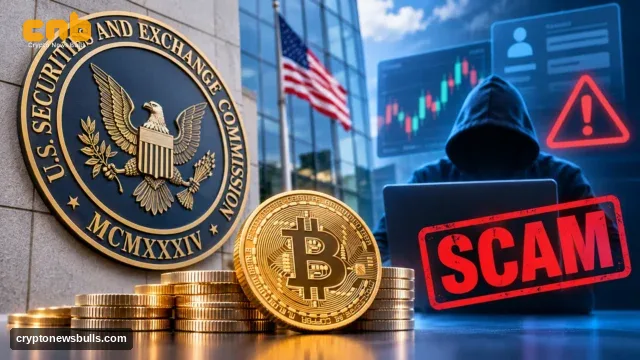
The US Securities and Exchange Commission has filed charges against eight Colorado-based entities accused of defrauding American investors out of more than $37 million via counterfeit investment advisory services and cryptocurrency trading platforms.
According to the regulatory agency, the operation utilized social media ads, private messaging groups, and forged regulatory paperwork to persuade victims that they were working with genuine financial experts. Investors were initially given stock market tips before being funneled toward platforms that seemingly supported cryptocurrency buys but were actually designed to misappropriate their funds.
The SEC suspects that individuals operating overseas drove the scheme, which spanned from August 2024 through May 2026. Rather than sticking with a single corporate identity, the alleged bad actors cycled through four consecutive pairings of investment advisers and crypto platforms, discarding each configuration after a matter of months.
This case underscores how fraudsters continue capitalizing on rising enthusiasm for digital assets by leveraging the facade of regulatory oversight and professional wealth services to earn victims’ confidence.
Fake Investment Advisers Used Social Media to Target Investors
The SEC complaint outlines a workflow that kicked off with advertisements across social media networks. These promotions steered prospective investors into group chats and private dialogue channels managed by the individuals orchestrating the scam.
Participants within these chats posed as representatives of investment advisory firms and offered initial counsel regarding US stock trades. Once targets built up trust in these supposed advisers, they were nudged into transferring larger sums of money into cryptocurrency trading exchanges.
Victims were led to believe they were acquiring authentic digital tokens via these services. Nevertheless, the SEC asserts that these platforms were fraudulent fronts built strictly to harvest investor capital rather than execute real crypto transactions.
Furthermore, the operators allegedly leveraged fabricated SEC certificates and deceptive regulatory records to project authenticity. Investors who questioned the credibility of the offerings were occasionally pointed toward filings submitted to the SEC, the Financial Industry Regulatory Authority (FINRA), and the Financial Crimes Enforcement Network (FinCEN).
Eight Entities Named in the SEC Complaint
The SEC listed eight Colorado corporations implicated in the scheme:
-
Advisor WeChat Capital
-
Tech Brokerage Asset Alliance Ltd.
-
HB Wealth Advisors
-
IdeaCrypto Exchange LLC
-
Convergent Wealth Advisors Inc.
-
RealSimple Crypto Exchange Inc.
-
Associated Wealth Advisors Ltd.
-
Essential Crypto Exchange
Per the complaint, these entities functioned via four successive adviser-and-platform combinations between August 2024 and May 2026. The alleged perpetrators rotated to fresh business aliases every few months, enabling the fraud to persist under new banners.
The regulator is pursuing permanent injunctions, conduct-oriented restrictions, the disgorgement of allegedly ill-gotten gains alongside prejudgment interest, and civil monetary penalties. These charges remain unproven allegations, and the defendants have not been found liable through a court ruling.
SEC Warns Investors About Crypto Scams and Fake Regulatory Credentials
This latest action builds upon prior SEC cautions regarding investment scams pushed via messaging apps and digital group chats.
In December 2025, the commission issued an investor advisory calling attention to how fraudsters impersonate financial professionals and utilize group discussions to market fraudulent financial ventures. The agency has repeatedly stressed that claims of SEC registration should never be taken as definitive proof that an investment vehicle or exchange is legitimate.
The SEC urges investors to verify the backgrounds of individuals and companies pitching financial services by utilizing Investor.gov tools. It also advises reporting suspected financial fraud through the organization’s online tip portal.
While those figures address different timeframes, they offer broader context regarding the regulator’s recent enforcement focus within the digital asset sector.
The SEC’s newest enforcement step highlights the ways bad actors can abuse the prestige of established financial institutions and regulatory bodies to make bogus crypto offerings look believable. For everyday investors, verifying the identity and registration credentials of any adviser or exchange remains a critical precaution prior to transferring funds.
Do you think social media platforms should face stronger obligations to prevent fraudulent crypto investment advertisements? What additional measures could help investors identify fake trading platforms before losing their money?

Written by

 Yuki Yamamoto