


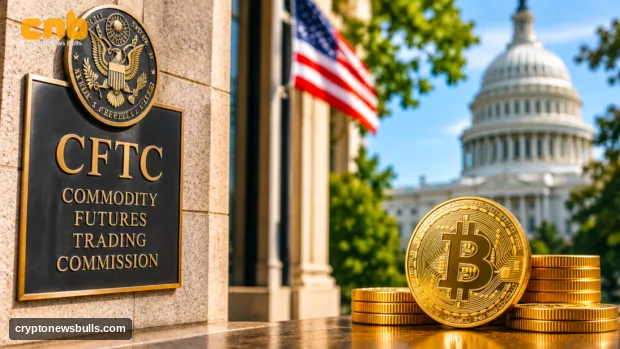
The Commodity Futures Trading Commission (CFTC) has granted approval to Backpack’s blockchain-driven derivatives exchange and clearinghouse, paving the way for a new generation of digital asset trading systems in the world’s premier financial market.
This milestone arrives as the United States continues to refine its stance on cryptocurrency regulation, generating new avenues for businesses building institutional-grade blockchain networks.
On November 16, the CFTC cleared TLD Markets—doing business as Backpack Exchange—to act as a designated contract market. This action followed the November 13 registration of Backpack Clearing as a derivatives clearing organization.
Combined, these clearances lay down the regulatory groundwork for a system built to handle cryptocurrency derivatives trading, clearing, and settlement via blockchain technology.
CFTC Opens The Door To Blockchain-Based Trading
This regulatory choice holds significance because Backpack intends to introduce several features commonly found in international crypto markets into a US-supervised framework.
Per the company’s statement, the proposed venue is set to accommodate cryptocurrency perpetual futures, round-the-clock trading, crypto collateral, cross-margining, and availability through a unified global order book.
In time, these functions may grant eligible US market participants entry to advanced trading tools while staying compliant with regulatory guidelines.
That said, these permissions do not imply that the exchange has commenced operations or that all proposed products are currently live.
The firm has not yet shared a definite launch date for US trading.
This step also aligns with regulators increasingly acknowledging the capacity of blockchain technology to upgrade financial frameworks.
CFTC Chairman Michael Selig praised the permissions, calling them a vital benchmark for American financial markets.
His remarks stressed that current regulatory tenets can accommodate novel technological designs while preserving market oversight and investor safeguards.
Why The Approval Matters For Bitcoin
Even though Backpack’s regulatory achievement focuses on derivatives architecture rather than the underlying Bitcoin network, its wider effects could prove meaningful for the digital asset ecosystem.
Bitcoin remains one of the most heavily traded cryptocurrencies, and regulated derivatives markets are critical for institutional involvement.
Futures and related derivatives enable market participants to hedge exposure, manage risk, and take directional stances without needing to hold the physical asset.
Broadening regulated systems could ultimately enhance market access and back more complex Bitcoin trading strategies.
We believe this represents a constructive development for Bitcoin’s long-term adoption.
Nonetheless, the effect on Bitcoin liquidity will rely on the specific products Backpack lists, the trading volume the platform manages, and whether institutional users embrace the offering.
Blockchain Infrastructure Gains Institutional Recognition
Backpack’s authorization additionally underscores a broader shift taking place within traditional financial markets.
Financial entities are looking more closely at blockchain technology for settlement, trading, collateral handling, and tokenizing assets.
Backpack US President Mark Wetjen stated that the approval proves blockchain innovation and strict regulatory adherence can successfully coexist.
Meanwhile, Backpack CEO Armani Ferrante highlighted the firm’s goal to bridge traditional financial instruments with blockchain-based systems.
The organization’s strategy reaches beyond crypto-native traders to include financial institutions and other market participants looking for unified trading solutions.
What Comes Next For Regulated Crypto Derivatives?
The upcoming major milestone will be the official US launch of Backpack trading.
Investors will monitor updates regarding accessible contracts, leverage ceilings, collateral rules, and user eligibility.
Such specifics will shape how the venue contends with existing regulated derivatives platforms.
Regarding Bitcoin, the overarching trend continues to look positive.
The green light demonstrates that blockchain-rooted financial infrastructure can win official approval inside the US derivatives regulatory framework.
It also underscores the deepening ties linking cryptocurrency markets to traditional finance.
While one regulatory approval cannot guarantee higher Bitcoin prices or immediate institutional inflows, it represents another step toward making digital asset markets more accessible through regulated infrastructure.
We believe continued development in this area could strengthen Bitcoin’s position within the global financial system over the longer term.

Written by
 Yuki Yamamoto