



Wall Street has welcomed back the artificial intelligence sector, sparking a sharp rebound across premier global technology firms. The ongoing correlation between Bitcoin and equities throughout 2026 brings up a compelling prospect: could digital assets soon catch the wave of this renewed investor optimism?
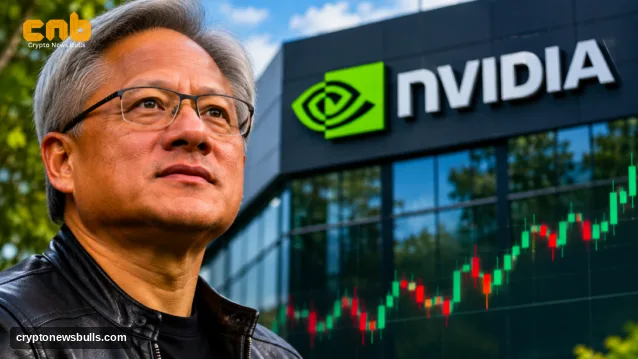
Tech shares mounted a powerful comeback on Monday, November 23, recouping losses from the previous week following Nvidia’s choice to bring back Jensen Huang as CEO.
Even so, the comparatively subdued movement of Bitcoin implies that the digital asset market might still be searching for its own specific spark.
Jensen Huang’s Return Reignites The AI Trade
In an official statement, Nvidia announced that its board unanimously selected Huang to resume his roles as president, CEO, and board member.
This news caused a dramatic shift in market psychology, propelling Nvidia shares up by roughly 31.5%.
Sharing his thoughts on X on November 24, cryptocurrency investor and commentator Lark Davis noted widespread double-digit rallies across artificial intelligence equities alongside a roughly 6.8% surge in the Nasdaq 100.
Nvidia gets Jensen back and the whole AI trade rips.
Dell +22%
Nebius +20%
CoreWeave +22%
Micron +19%
Marvell +18%
Arm +16%Nasdaq +6.8% in a day.
Last week everyone said the AI bubble popped. https://t.co/QgzFC9ctGX
— Lark Davis (@LarkDavis) November 24, 2026
This swift turnaround is notable given that market participants were openly debating whether the artificial intelligence investment bubble had burst only days prior.
Such synchronized gains signal a growing appetite among investors to embrace riskier, growth-focused instruments once again.
This behavioral shift carries significant weight for Bitcoin.
Why Bitcoin And Nasdaq’s Relationship Matters
Digital assets and tech equities frequently react to identical macroeconomic drivers, such as central bank policies, overall market liquidity, and risk tolerance.
As confidence in growth assets builds, capital often spills over into other avenues offering high-growth potential.
Nonetheless, the pace of Bitcoin’s reaction to Nvidia’s news highlights a clear divergence.
BTC touched a peak near $64,446 before settling back to roughly $61,200, posting a modest 0.7% gain over the observed 24-hour window.
Rather than automatically dismissing this gap as a sign of weakness, observers should keep in mind that tech stocks and Bitcoin are reacting to distinct near-term catalysts.
Nvidia’s bounce was driven by internal corporate events, whereas Bitcoin continues to track broader liquidity trends and crypto-specific capital flows.
Could Bitcoin Become The Next Beneficiary?
As highlighted in prior coverage regarding Bitcoin whale distribution, major shifts in the tech industry can reshape how capital is distributed across traditional and alternative markets.
Renewed enthusiasm for artificial intelligence may help rebuild morale among market participants who recently scaled back their exposure to speculative assets.
Should this positive sentiment bleed over from equities, Bitcoin could stand to gain from fresh capital inflows.
Still, a lasting recovery requires robust spot-market demand rather than a reliance solely on leveraged positions.
The recent leverage-led correction in Bitcoin underscored how speculative positioning dictates short-term pricing without damaging the network’s foundational scarcity.
This distinction could prove vital if the wider financial markets maintain their upward trajectory through the remainder of November.
What Could Trigger Bitcoin’s Next Move?
The primary signal to watch is whether Wall Street’s renewed optimism broadens out into an overall expansion of global risk appetite.
While a persistent technology sector rally builds a welcoming investment climate, macroeconomic factors like monetary policy, Treasury yields, and the strength of the dollar remain critical.
For Bitcoin, breaking back toward its recent high near $64,500 would serve as an early sign that buyers are regaining control.
A sustained break above that threshold, backed by solid spot buying, would offer more definitive proof of healthier market conditions.
In the end, Nvidia’s powerful resurgence proves how rapidly market sentiment can pivot once uncertainty surrounding a cornerstone asset clears away.
Bitcoin does not need to duplicate Nvidia’s exact trajectory to forge its own path forward.
Even though the Nasdaq rally presents an encouraging macroeconomic backdrop, Bitcoin’s capped supply, sovereign monetary profile, and deepening institutional integration remain the true pillars of its long-term thesis.

Written by
 Yuki Yamamoto