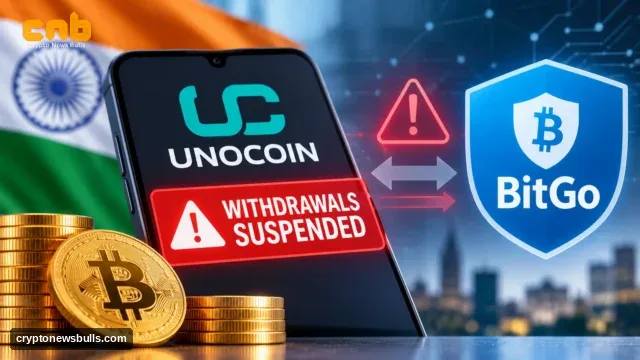
Indian cryptocurrency platform Unocoin continues to keep deposits and withdrawals on hold while it probes suspicious activity connected to its BitGo wallet infrastructure. Recent findings indicate these transfers might have taken place through a recovery mechanism outside of BitGo’s main system, prompting fresh questions about how the transactions occurred while the custodian account was frozen.
On November 13, Unocoin reported that BitGo had frozen its enterprise account on November 6 following the exchange’s request, and that this freeze functioned as intended. Even so, the transactions currently under review were reportedly signed and broadcast outside the BitGo platform.
Unocoin Suspects Misuse of BitGo Wallet Recovery Feature
This latest development focuses on a recovery tool built into BitGo’s multisignature wallet framework. According to Unocoin, this option enables wallet owners to reach their funds if BitGo becomes unavailable.
The platform suspects this capability may have been improperly used to authorize transfers outside the custodian’s standard ecosystem. Such a scenario could account for how outgoing transactions went through even after BitGo verified the freeze on the enterprise account.
Earlier, Unocoin revealed it had spotted outgoing transactions on November 12 originating from an Ethereum address within its BitGo wallet setup. That address funded ERC-20 tokens, prompting the exchange to report the issue to BitGo immediately.
BitGo subsequently launched a probe into how those transfers were carried out. While Unocoin’s latest theory offers investigators a new angle to explore, the exchange has not verified that the recovery feature was actually exploited, nor has it identified who authorized the movements.
Security Breach Forced Unocoin to Suspend All Services
The situation began on November 6 when Unocoin flagged unauthorized actions within its systems. In response, the exchange asked for immediate freezes on its enterprise accounts with both BitGo and Fireblocks, which store the crypto balances utilized for daily operations.
Both custodians confirmed the freezes. At that point, Unocoin stated it had not found any missing cryptocurrency funds.
However, additional unauthorized activity turned up on November 9. Consequently, the exchange halted all services as a safety precaution to safeguard user assets and data.
An ensuing investigation confirmed that the platform’s infrastructure had indeed been breached. The organization has yet to pinpoint the exact root cause of the intrusion or identify which specific systems and files may have been compromised.
Rather than attempting to repair the potentially vulnerable environment, Unocoin opted to rebuild its entire server network from scratch. A security update on November 12 projected that this rebuild would take roughly four to five business days.
More Than 90% of Customer Crypto Held in Cold Storage
Unocoin has pointed out that over 90% of the digital assets it holds for users are kept in cold storage, meaning they reside in offline wallets.
Even so, the exchange has not offered a definitive evaluation of which funds might have been impacted by the suspicious transfers.
The inquiry faces hurdles because the BitGo enterprise accounts remain frozen, blocking direct access for the company. Unocoin also highlighted BitGo’s reliance on change addresses, which can obscure a complete transaction timeline when viewed through public blockchain data.
As a result, the exchange stated it lacks full visibility into potentially unintended movements across its BitGo wallets. It has formally asked the custodian for transaction-level details and further clarity.
The firm has underscored that it will not issue guarantees regarding the status of user balances until all relevant information is thoroughly checked.
Unocoin Investigation Raises Questions About Custody Security
This event underscores the inherent security hurdles involved in digital asset custody, particularly when recovery tools supply alternate routes to wallet funds.
While multisignature wallets help bolster asset safety by demanding multiple sign-offs before a transfer finalizes, backup systems and recovery paths require strict safeguarding because they introduce alternative avenues to access capital.
Unocoin’s current inquiry is concentrated on figuring out how the transactions gained authorization, whether its wallet recovery setup played a part, and if any user funds suffered losses.
Do you think the suspected misuse of BitGo’s recovery feature points to a broader weakness in cryptocurrency custody systems?
Will Unocoin be able to restore customer confidence once its investigation is complete and withdrawals resume?

Written by

 Yuki Yamamoto