




Ethereum’s valuation is nearing a vital technical juncture as co-founder Vitalik Buterin expresses fresh optimism regarding a framework designed to speed up the network’s adoption of quantum-resistant cryptography.
This progress has drawn widespread interest across the crypto space, prompting discussions over whether Ethereum’s strengthening technological outlook could eventually bolster demand for ETH.
This update arrives as Ethereum continues to navigate a difficult market landscape. As noted previously, Ethereum whales are buying the dip, with major wallet addresses accumulating ETH near key support zones. Such activity could prove crucial if buyers manage to wrest back short-term momentum.
Vitalik Buterin Backs Ethereum’s Quantum-Safe Future
On November 16, Buterin published an in-depth breakdown of leanPCS, a cryptographic methodology linked to Ethereum Improvement Proposal 8288.
His remarks signaled a notable shift in his evaluation of the system.
Over the past few weeks I’ve gone from thinking leanPCS is total bull to being a total bull.
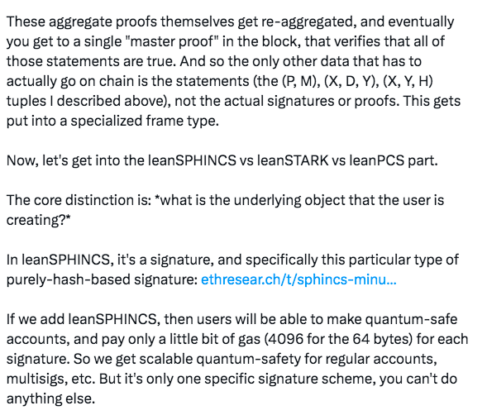
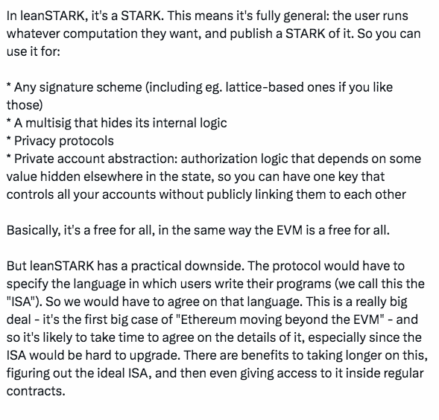
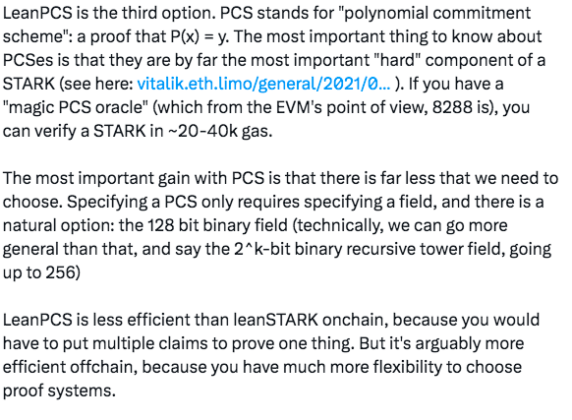
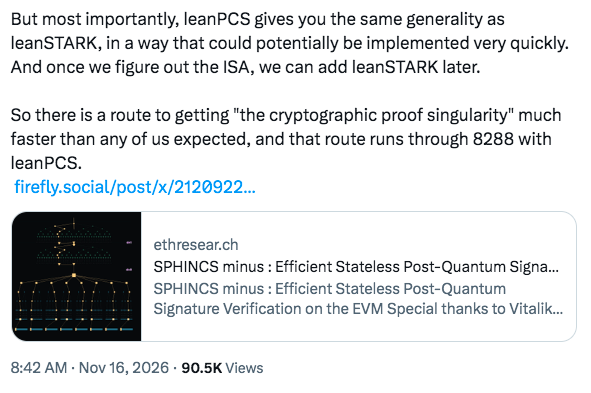
Buterin pointed out that Ethereum faces a distinct engineering hurdle as it gears up to implement quantum-resistant security measures.
Standard Ethereum transaction signatures tend to be quite compact. By contrast, quantum-proof signatures and advanced cryptographic proofs demand considerably more data payload, which threatens to drive up network fees.
Per the specifications of Ethereum EIP-8288, the proposed framework would bundle cryptographic proofs and signatures into a single recursive STARK, helping to mitigate the heavy data overhead typically tied to quantum-resistant transactions.
Ultimately, this methodology could pave the way for leaner transactions, heightened cryptographic protection, and expanded flexibility for developers.
That said, EIP-8288 remains in draft form, meaning its potential advantages have not yet been integrated onto the Ethereum mainnet.
Ethereum Price Technical Analysis: Can ETH Reclaim $2,000?
While Buterin’s statements offer an encouraging long-term horizon, Ethereum’s immediate price trajectory hinges on whether buyers can seize control of current market conditions.
The $2,000 threshold serves as a critical psychological marker, particularly in the wake of recent downward pressure.
Fresh evaluations of Ethereum’s accumulation metrics point to another milestone: the proportion of ETH locked in staking has hit historic peaks, signaling enduring dedication from long-term participants.
A sustained breakout above $2,000 would serve as an encouraging opening indicator, though traders are advised to inspect the four-hour charts for additional confirmation.
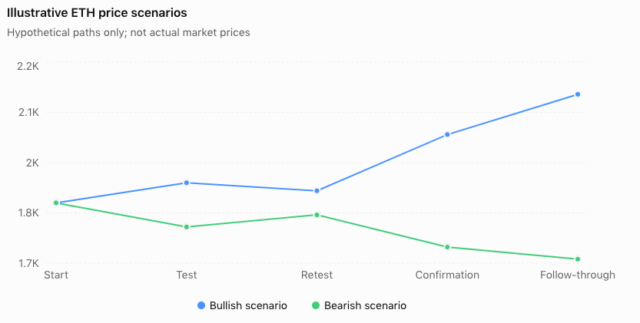
The 50-period exponential moving average assists in pinpointing shifts in near-term momentum, whereas the 200-period EMA offers a broader perspective on the prevailing direction.
Should ETH climb past both benchmarks and successfully test them as support, the recovery narrative would gain substantial credibility.
Conversely, if quotes stay capped beneath these moving averages, upward thrusts may merely reflect temporary relief bounces instead of a validated trend reversal.
The Relative Strength Index (RSI) supplies another vital metric.
A firm push past 50 would point to strengthening momentum, especially if accompanied by robust trading volume. On the flip side, an RSI reading under 50 would show that sellers still maintain the upper hand.
For the moment, market participants should prioritize confirmation over banking on tech milestones to instantly drive up valuations.
Could Ethereum’s Quantum-Safe Roadmap Strengthen Long-Term Demand?
Ethereum’s long-term investment case increasingly relies on its capacity to stay secure, scalable, and functional as blockchain ecosystems mature.
Quantum computing introduces a looming threat to current cryptographic frameworks, making Ethereum’s proactive preparations a vital pillar of its upgrade schedule.
Bitcoinist previously noted that Ethereum researchers have prioritized quantum security, highlighting how post-quantum defense has turned into a core component of the network’s evolution.
The suggested EIP-8288 blueprint could assist in lowering the costs associated with validating larger signatures and complex cryptographic proofs.
For institutional players and developers alike, enhanced efficiency and security could elevate Ethereum’s appeal as a premier platform for financial solutions.
Still, the link between engineering upgrades and the market price of ETH is never automatic.
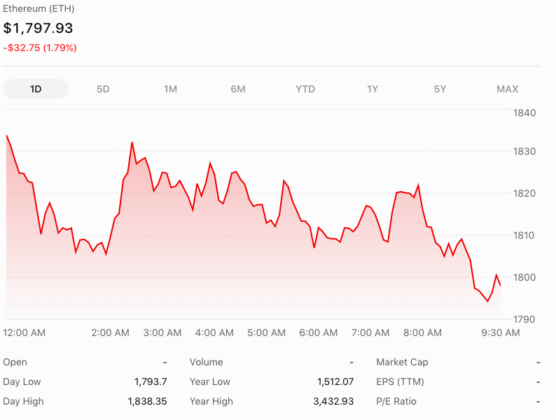
The daily chart will prove especially telling when assessing whether Ethereum is constructing a lasting recovery structure.
A pattern of ascending troughs, rising transaction volume, and a decisive break above the 200-day moving average would supply firmer proof of a trend reversal.
Until those criteria materialize, investors would do well to separate Ethereum’s long-term technological promise from its short-term price action.
What’s Next For Ethereum Price?
Buterin’s mounting confidence in leanPCS marks a promising milestone for Ethereum’s future resilience and scalability.
Even so, the asset’s next major breakout will hinge on whether buyers can forge sturdier technical momentum.
We hold that the pairing of ongoing network development with a strengthening price setup could forge a healthier climate for ETH over time.
The immediate test remains recapturing the $2,000 mark and setting up a stable sequence of higher lows.
If bulls accomplish this, attention can pivot toward subsequent resistance bands outlined on the daily timeframe.
For now, Ethereum’s quantum-resistant roadmap provides an important long-term narrative, while technical indicators will determine whether the current market recovery has enough strength to continue.

Written by

 Yuki Yamamoto